Whether you are taking your RV out of storage and getting it ready for Spring camping (dewinterizing) or you want to keep your RV on the ready throughout the year, these RV generator tips and tricks will come in handy! You don’t want to get caught with unexpected problems on the road. Most motorhomes and some trailers provide an additional source of 120-volt AC power with an onboard power generator. This unique feature offers the convenience of 120-volt AC power whenever you need it, making the RV fully self-contained. On motorhomes, the fuel supply for the generator comes directly from the motorhome’s fuel tank. The system is designed so the generator stops running when the fuel gets to 1/4 tank. This prevents using all the fuel in the tank, leaving you stranded. Some motorhomes have an automatic switchover from an external power supply to the generator. Other motor homes require you to plug the motorhome power cord into a generator receptacle on the RV to use the generator.
Three Good Reasons to Exercise the RV Onboard Generator
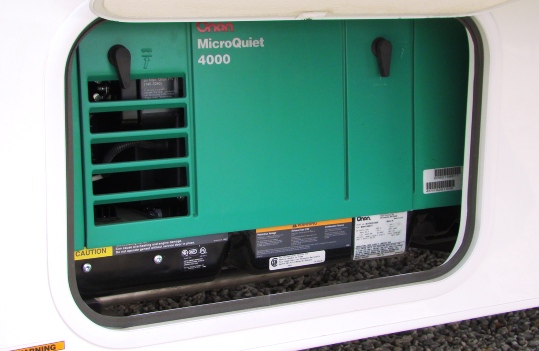
- Fuel-related problems are the number one reason for exercising the generator, but there are other reasons, too.
- Moisture build-up can result in damage to the generator. When you exercise the generator, it heats up the generator windings and eliminates moisture.
- Exercising the generator also helps lubricate the engine seals and internal components, which can prevent carbon build-up.
Gasoline Generators – Lack of Use is a Big Problem
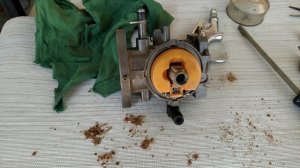
It might seem odd, but the lack of use is one of the biggest problems with gasoline generators. Fuel can start to break down in a couple of months. When a generator sits for months at a time, the fuel starts to varnish and gum up, resulting in hard-starting and surging problems.
Safety First When Testing RV Generators!
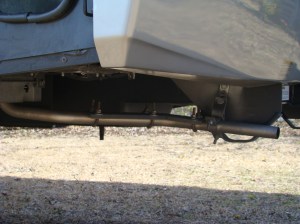
Whenever you are working on or using your generator, there is a threat of carbon monoxide poisoning. Always inspect the entire generator exhaust system prior to starting it. Do not operate a generator with a damaged exhaust system!
Preventive Maintenance Checks You Can Perform on a Typical RV Generator
RV Checklist: Here are some PM checks you can perform on a typical RV generator. In addition to these checks, you should always follow the maintenance schedule and guidelines found in the generator set owner’s manual.
Note: These PM checks are for a gasoline-fueled generator. There are diesel and propane-fueled generators, too. Some of these checks apply to all types of generators, but some don’t. Consult your generator owner’s manual for maintenance checks, services, and service intervals for your specific generator.
- Always check the oil level and the exhaust system prior to starting the generator. Starting and running a generator that is low on oil can result in costly damage to the generator’s engine. Add oil as required. Check your owner’s manual for the type of oil to use. Change the oil and oil filter (if equipped) at the recommended intervals. This is perhaps the most important PM Service you can perform on your generator to ensure years of reliable service. It’s really quite simple to do. Your generator owner’s manual will usually describe the steps to follow. If you don’t feel comfortable changing the oil and filter, have an authorized RV service center do it for you.
- Keep the generator set and the compartment it is housed in clean. You can use compressed air to assist in cleaning the generator compartment, and use a clean shop rag to wipe the generator set off. Note: always wear safety glasses when using compressed air.
- While you are cleaning the generator, check all electrical connectors for secure connections.
- Check all of the filters on the generator. A typical generator may have an air filter, fuel filter, and oil filter. Check your generator owner’s manual for the types of filters your generator has and where they are located. Maintenance checks and services for a generator are based on hours of operation. You need to monitor the hour meter on your generator set for all maintenance intervals.
- Check the air filter for cleanliness. You can remove the filter and inspect the fins on the back for signs of dirt or debris. You can tap the air filter on a flat surface to help remove some of the dirt and debris. If the filter is dirty, replace it now, or replace it at the prescribed intervals. Inspect the air filter more often in dusty conditions and/or during heavy usage.
- Check and replace the fuel filter at prescribed intervals. The fuel filter will typically be an in-line type of filter. As it filters out dirt and debris, it eventually collects enough debris to interfere with the flow of fuel.
- Replace the spark plugs at recommended intervals. If you have replaced spark plugs in a vehicle, you can replace the spark plugs in the generator, unless, due to the constraints of the generator compartment, you can’t access the spark plugs. In this case, you may want to let an authorized RV service facility do it for you. If you decide to do it yourself, check your generator owner’s manual for the correct type of plug to use and double-check the spark plug gap before installing the plugs. Do not over-tighten spark plugs!
Exercise the RV Generator
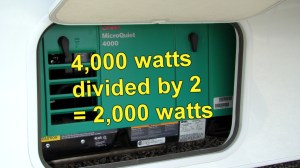
Generators are designed and intended to run with a load, as opposed to no load. By load, I mean an electrical load. Generators are rated in kilowatts (KW). One kilowatt equals 1,000 watts. So, a 4 KW generator would be a 4,000-watt generator. So, what exactly do I mean when I say exercise your generator? For a gasoline generator, I mean that you start and run the generator with at least a 50 % load, for at least two hours every month. So, as an example, you would exercise a 4000-watt generator with a minimum 2000-watt load. This is roughly equivalent to running one RV air conditioner, or a small portable electric heater.
Caution: Do not use a portable electric heater that is rated higher than 1500 watts, and do not run a 1500-watt heater continuously. If the heater is used for long periods of time, set it on a lower setting, and do not leave it on unattended. When you purchase a portable heater, make sure it has a tip-over feature where it shuts off if it is bumped or tipped. Follow all operating instructions that come with the heater.
It is extremely important that you run it with this minimum rated load. Generators are designed to run with a load on them. It’s always better to let your generator run for longer time periods than it is for short time periods. Check your generator owner’s manual for load ratings specific to your unit.
Caution: Always try to avoid starting or stopping a generator when there is a 120-volt device or appliance turned on.
Is it Possible to damage 120 Volt Appliances in an RV using a generator?
Most RVs sold have a 30-amp electrical system, so I will use that as an example. Most campgrounds you stay at will provide a 30-amp outlet that your RV power cord will plug directly into. If you go to a campground that only has a 20-amp house-type outlet, there are electrical adapters you can use to go from your RV plug to the house-type outlet. But this limits what you can use in the RV to a maximum of 20 amps. Caution: It is possible to damage some appliances if they do not get the required amperage to start and operate properly. For example, if you plug the RV into a 15-amp outlet and you use a small appliance drawing 5 amps, there are 10 amps remaining. Then you turn the roof air conditioner on, but when the air conditioner’s compressor engages, it needs 13 or more amps, and it is not available. This can damage the air conditioner’s compressor and other components.
You need to be selective about what you are using, even with a 30-amp service. If you try to use too much electricity, the RV will let you know by tripping a breaker in the distribution box, and hopefully, no harm will be done.
When the Generator is in Storage
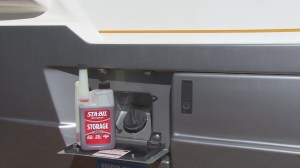
In addition to the monthly exercise regime, I recommend you use a fuel preservative to help protect the entire fuel system when the generator is in storage. Follow the manufacturer’s instructions for using fuel preservatives.
Using fuel preservatives applies to any gas-powered items you have sitting in storage at home, like lawnmowers, weed-eaters, and ATVs. A good habit to get into is to add the correct amount of preservative to the gas can every time you fill it with gas.
These generator problems mostly occur when the generator sits in storage for months at a time. If you have not started and run your generator with a load on it in the last month or two, now would be a good time to do it.
My experience managing large-scale maintenance operations within the military gave me valuable tips and tricks on generator operation. One of my maintenance assignments was in a communications Battalion that had hundreds of generators to service and maintain. When we conducted monthly preventive maintenance checks and services, the generator operators were required to start and run the generator sets with a load to prevent starting and running issues caused by sitting idle for too long. You might say this was my early indoctrination in generator care and maintenance.
By following these simple steps and routine generator maintenance, you can keep your generator in top operating condition.
Some of this useful information and much more can be found in our electronic version of our popular The RV Book
Happy Camping,
Mark Polk
RV Education 101® / RV 101® RV Online Training
YouTube RV Education 101®
 RV 101® - RV Education 101®